[aioseo_breadcrumbs]
TIPS & HOW TO
Learning through boat building

Bruce Kemp
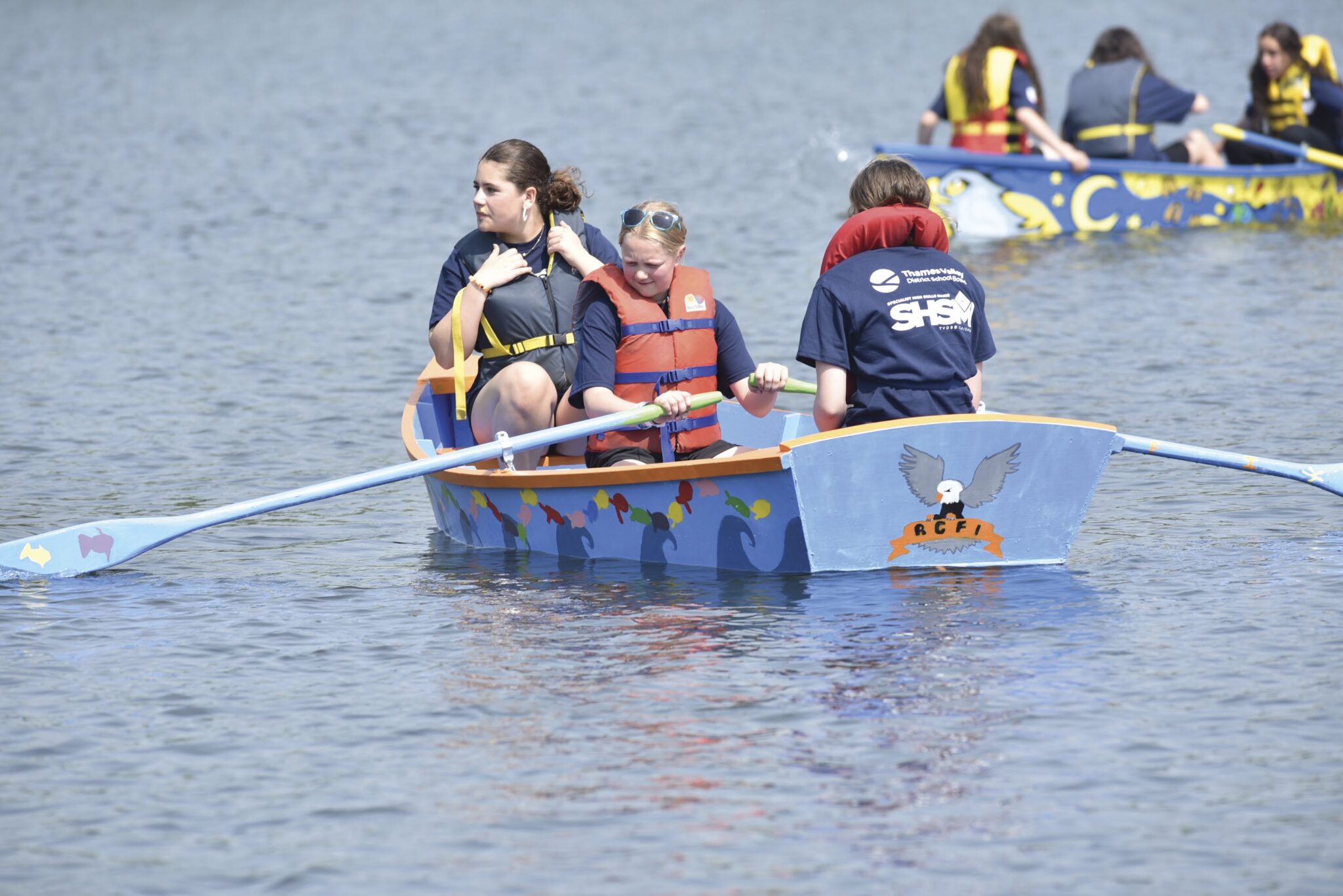
School isn’t easy for everyone. Here’s how a program that mixes woodworking and boatbuilding helps students focus on school and enjoy the learning experience.
How do you let kids know there are good career options in the construction trades? Try building a boat with them. We know it works, because veteran shop teacher David Vine of London, Ontario, is part of a larger international group that has been building boats—a lot of boats—and they can all swear to the attraction the craft holds for even the most jaded teenager.
“In 2017, when I was still in the classroom, my principal came to me and said, ‘We’ve got about 10 First Nations, Metis and Inuit kids that are having difficulty coming to school because they don’t want to leave the reserve. For those boys and girls or youngsters we need to come up with some kind of program that’s going to engage them and make them want to come to school.’”
“Fifteen or 20 years ago,” Vine remembers, “I heard about a family boat-building week at the Wooden Boat School in Brooklyn, Maine. I threw my kids in the car, and we drove down there and built a boat in a week with six families. That’s when I came to the idea that this sort of thing could be pretty impactful.”
Bruce Neilsen was Vine’s principal at Strathroy Collegiate and Institute where David was the head of the tech department. “One day David came to my office and said he had come across this program out of Virginia with these skiffs [small rowing boats] and the idea was that he could combine mathematics with design and construction in a way that I found intriguing,” Neilsen said.
Vine had already Googled his passions, looking for a compass needle to point the way to student engagement. “I threw wooden boats, water, woodworking, kids and nature into the search. What popped up was a man named Joe Youcha. Joe was the director of the Alexandria Seaport Foundation in Alexandria, Virginia.”
“They were rescuing street kids through the building of the Bevins Skiff. I started reading about him and my jaw just kind of dropped. He’d created the TWSBA [Teaching with Small Boats Alliance]. That’s now worldwide.”
When Vine contacted Youcha through Wooden Boat Magazine, he asked how all this worked. The first thing he said was, “This doesn’t exist in Canada. If you want to do this, you’re going to have to create this from scratch.”
“Quite a few Americans were doing it. TWSBA is an incredible organization because everybody shares everything.”
Vine drove to Chicago to meet Youcha. They spent three days together and when Vine returned home, he started researching every organization Youcha mentioned, then began calling their directors.
“I had to keep in mind any program needed to work in my school. Most folks involved in the program were carpenters and boatbuilders trying to figure out how to get their programs into the boards of education. I was one of the few guys already in a board and was trying to figure out how to become a boat builder.”
Neilsen thought it looked like something that would appeal to kids and maybe engage some students who otherwise were not fully dialed into school. At the very least it could be a cool, hands-on activity. The program is a co-educational activity.
In the end, the program’s success went far beyond what either Neilsen or Vine anticipated. “It was fantastic,” Vine says. “It grew beyond what any of us envisioned.”
By the first spring the boat was built and Vine invited Neilsen and the school’s superintendent to watch the launch. He towed the boat behind a bike (he also taught bicycle repair) on a trailer down to a local pond and administrators, staff and students all watched the launch. A few kids even got to go out in the boat.
“We thought that was success right there,” Neisen says. “Then we did another one the next year. We thought this was something neat that the kids of Strathroy would get to do for a few years, but I never imagined the scope that David ended up taking it to, nor that it would be something he’d end up spending his retirement doing.”
The Bevin’s Skiff was designed specifically to teach mathematics, geometry, carpentry and project management skills. At 11′ 8″ long and 120 pounds (it can carry 460 pounds) the boat can be built with three 4 × 8 sheets of 3/8″ marine plywood (British Standard 1088), a bunch of lumber available from the local lumber yard and a handful of bronze nails and screws.
In early June 2025, 500 students, parents and volunteers representing 11 area high schools, service clubs, representatives from Canadian Woodworking & Home Improvement magazine and members of LIUNA (Labourers International Union of North America) arrived at London’s Fanshawe Lake for the program’s fourth annual regatta.
The regatta saw 12 highly decorated boats take part. It was a pretty relaxed affair. Vine had kids from as early as Grade 6 who helped build the boats, all the way up through secondary school grades with a bit of post-secondary involvement. “We had kids from 10 to 20 years old involved,” he said.
For more information on this program visit Stem2stern.ca.
Photos credit: Bruce Kemp
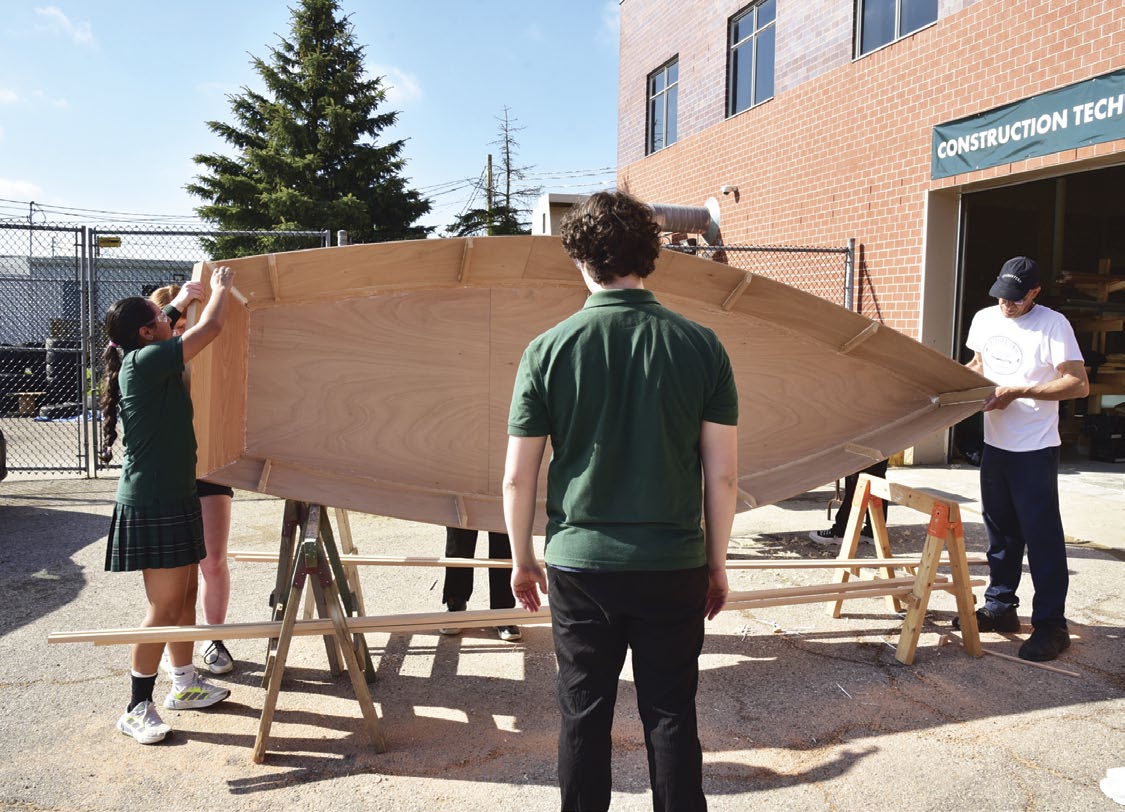
Flip It Over
Vine helps some students flip over one of their boats so they can work on the hull’s exterior.
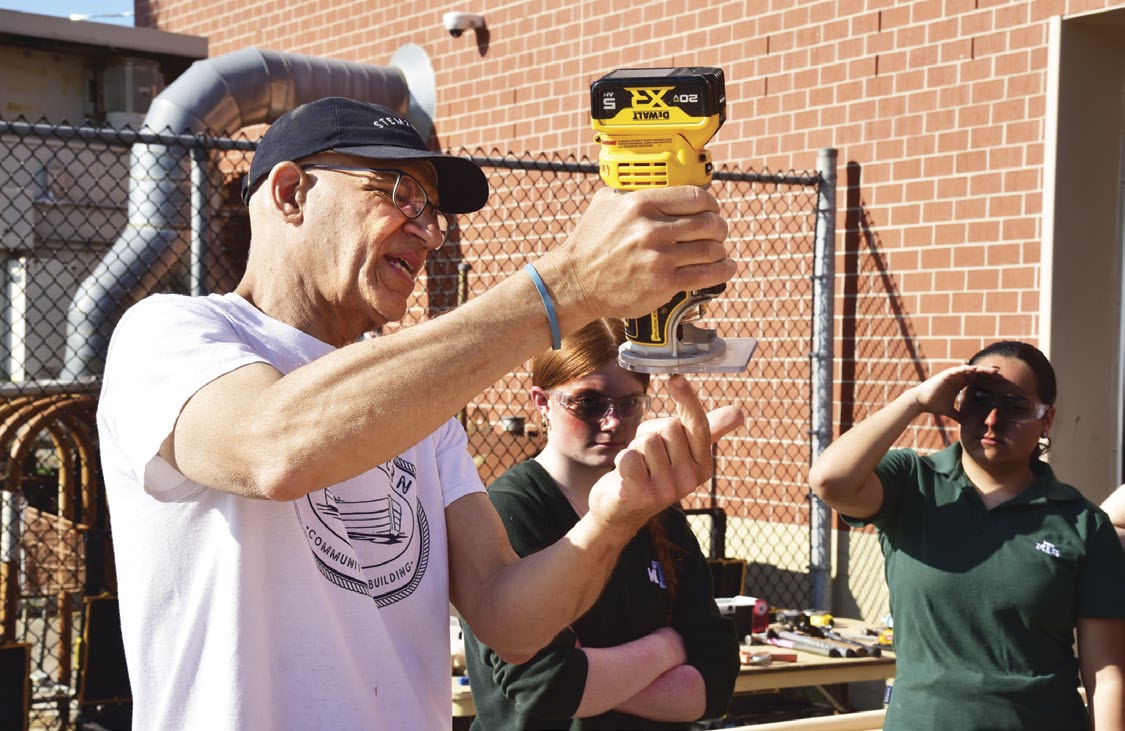
Proper Technique
Vine demonstrating how to properly use a router. Student safety is one of the most important aspects of his job.
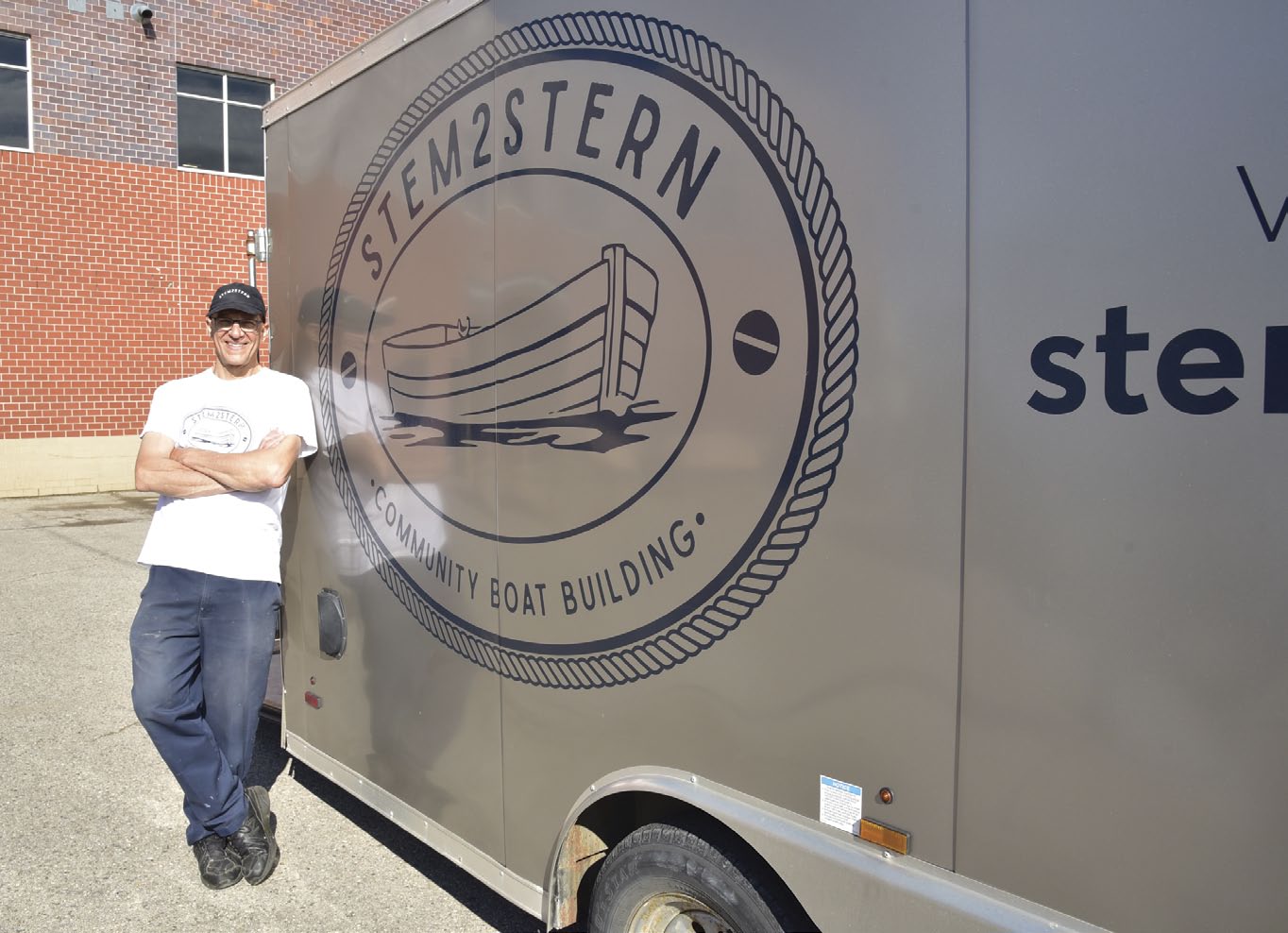
The Mastermind
David Vine, Stem to Stern creator, alongside his trailer.
Good Technique
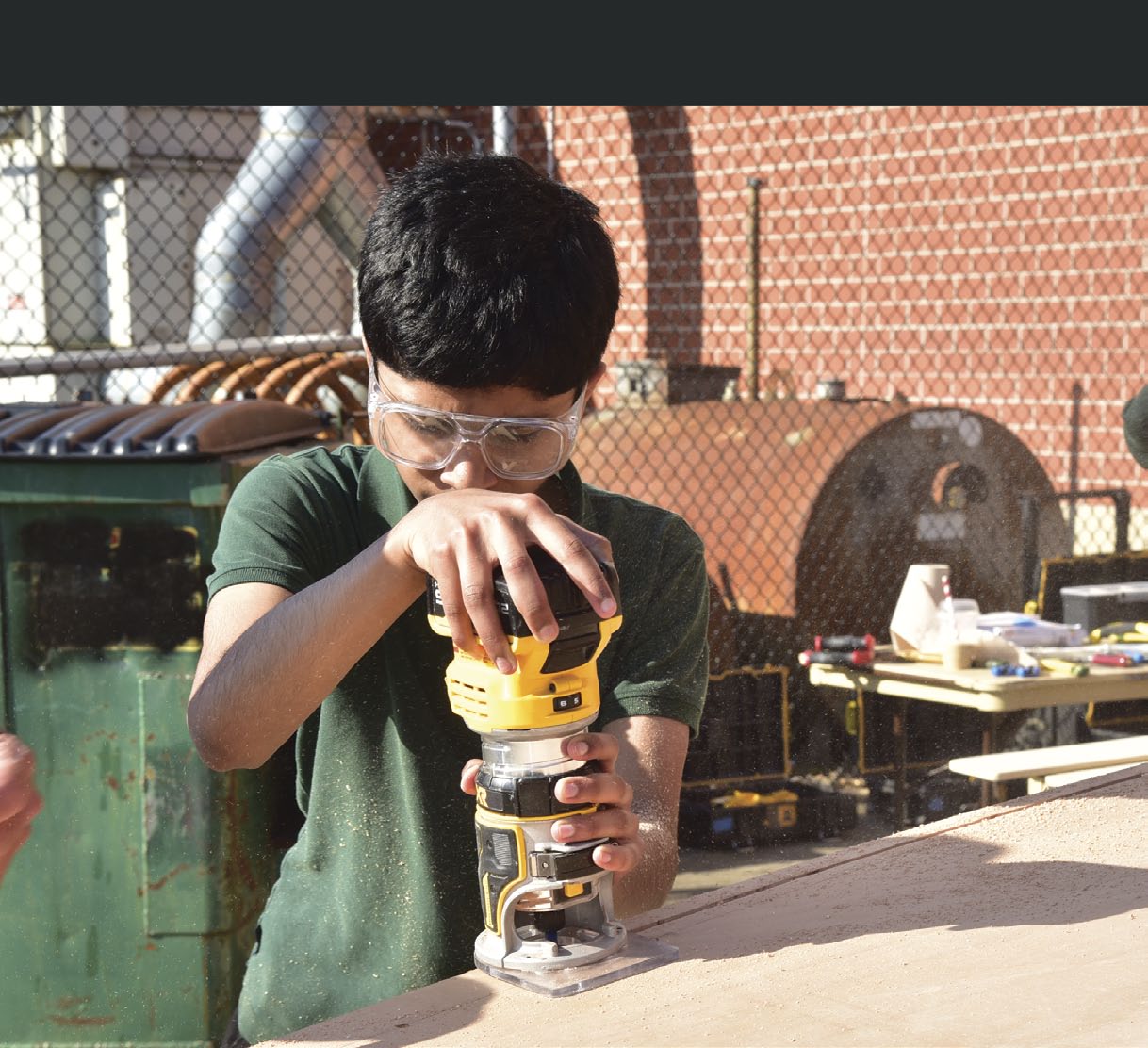
One of the most recent Stem to Stern students employing proper routing technique to finish shaping the hull.